Hi-Res Dynamic IEMs: MMCX Cable + Dual Plug Options
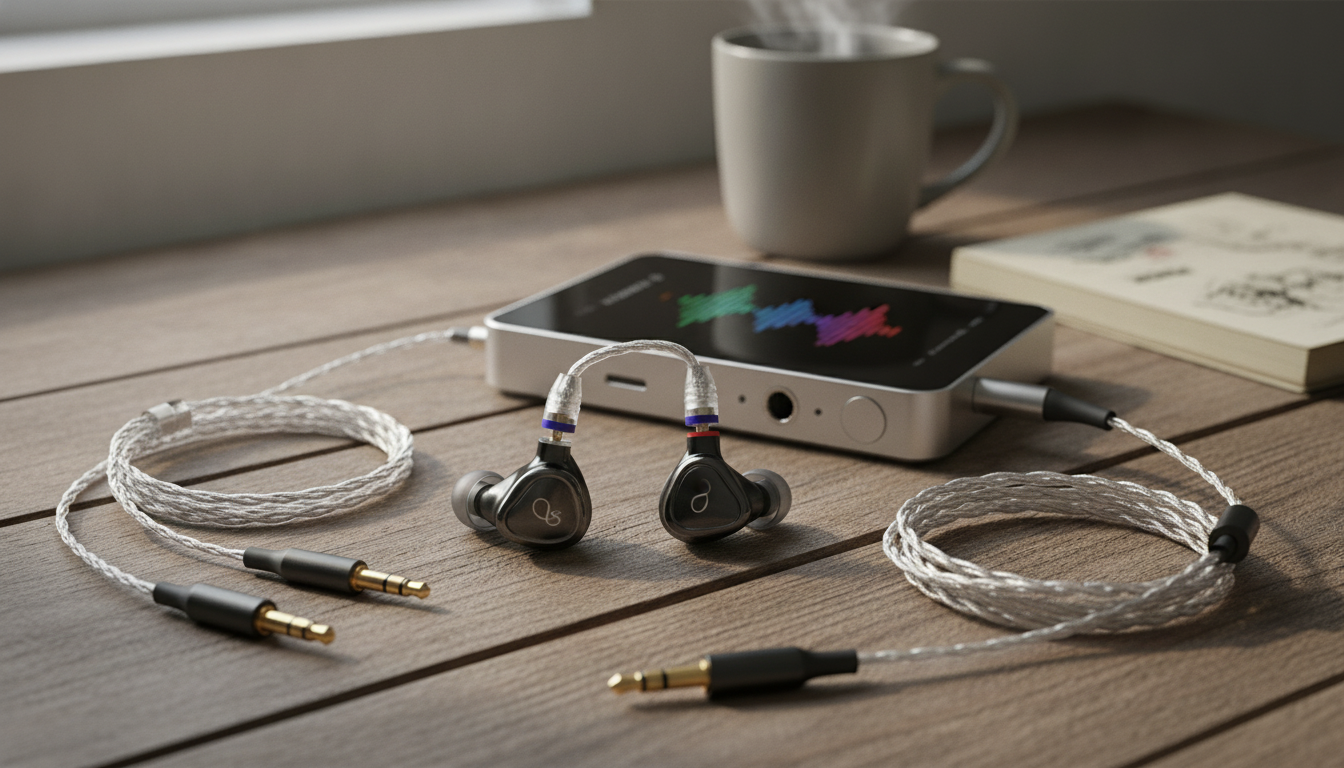
Hi-Res Dynamic In-Ear Earphones with MMCX Cable & Dual Plug Options
Dynamic-driver in-ear earphones are a favorite for listeners who want a natural low end, convincing impact, and an easygoing presentation that still feels “alive” across genres. This Hi-Res-capable model adds everyday practicality with an MMCX detachable cable and dual plug options, so it can slot into different setups—from phones and compact dongles to dedicated players—without turning daily listening into a cable-and-adapter puzzle. For more guidance, see Tennmak Pro Dual Dynamic Driver Professional In-Ear ….
If you’re aiming for a dependable pair of in-ears that can scale with better sources, the biggest factors are simple: the tuning, the seal, the connector system, and choosing the right plug for the gear you already use.
What these earphones are designed to do
- Deliver cohesive, full-range playback with a dynamic driver approach that emphasizes punchy bass and smooth transitions from lows to highs.
- Work well with higher-quality playback (lossless files, capable DACs/players) without becoming overly analytical or fatiguing.
- Use a detachable MMCX cable so worn cables can be replaced and future upgrades (balanced, mic, different lengths) stay on the table.
- Include dual plug options to match multiple devices in many setups without extra adapters.
Sound profile: what to expect from a dynamic driver
Dynamic drivers are often chosen for their “all-in-one” coherence—notes tend to feel connected, bass hits with roundness, and the overall presentation is less disjointed than some multi-driver designs when the tuning is done well.
Bass
Expect strong sub-bass presence and a rounded mid-bass that can add warmth and drive to pop, hip-hop, EDM, and rock. The quality of the seal is the deciding factor here: a small leak can make bass sound flat, while a consistent seal restores depth and impact.
Midrange
A controlled dynamic driver can keep vocals and guitars natural and continuous, rather than segmented. If vocals sound recessed or too thick, tip selection and insertion depth are usually the fastest fixes—often faster than swapping sources.
Treble
“Hi-Res” positioning generally implies extended treble and audible detail, especially on well-recorded tracks. Comfort depends heavily on the source pairing; brighter outputs can emphasize upper harmonics. For the clearest treble without harshness, prioritize a secure fit and a clean, low-noise source.
Soundstage, imaging, and scaling
In-ears are naturally close-field, but good channel matching and a consistent seal improve localization and perceived width. With a better DAC/amp, you may notice improved bass control, cleaner separation in busy mixes, and more convincing dynamic swings. If a headphone jack is noisy, sensitive IEMs can reveal hiss—switching to a quieter dongle or player often resolves it.
For general Hi-Res context and labeling, the Japan Audio Society provides the certification overview here: Japan Audio Society: Hi-Res AUDIO.
MMCX detachable cable: durability, upgrades, and handling
MMCX connectors are popular because they rotate, which can reduce strain during movement and make routing more comfortable. For daily use, that rotation can help the cable “settle” into a stable position rather than constantly tugging at the connector.
- Easier maintenance: If a cable develops intermittent audio, replacing only the cable is typically faster and more cost-effective than replacing the entire earphone.
- Connection care: Align the connector carefully and press straight together. Avoid twisting while pushing, which can accelerate wear on the snap-fit mechanism.
- Upgrade path: You can later choose microphone cables, balanced cables, or different lengths as long as they’re MMCX-compatible.
For general manufacturer guidance on detachable cable handling and connector support, see: Shure Support.
Dual plug options: choosing the right connection for your gear
The most important rule is also the simplest: use the plug that matches the output you already rely on. Single-ended connections remain the default for most everyday devices, while balanced outputs are common on portable players and some desktop amps.
Quick compatibility guide for plug choice
| Listening setup | Best plug choice | Why it fits |
|---|---|---|
| Phone + USB-C/Lightning dongle | Single-ended | Most compact dongles prioritize universal compatibility and simple playback. |
| Laptop/desktop headphone jack | Single-ended | Standard output on computers; easiest to share across devices. |
| Portable music player with balanced output | Balanced | Often delivers higher power and cleaner separation when the player is designed for it. |
| Desktop headphone amp with balanced output | Balanced | May improve headroom and control depending on the amplifier design. |
Fit, tips, and isolation: the biggest performance multiplier
Using them day to day: commuting, work, calls, and gaming
Care, storage, and troubleshooting
In-stock picks
- Hi-Res Dynamic In-Ear Earphones with MMCX Cable & Dual Plug Options ($255.01)
- Prada Polo Sweater ($795.80)
- Miu Miu Azure Patent Leather Thong Sandal with Square Toe and T-Style Design ($574.81)
FAQ
Do MMCX connectors wear out over time?
They can, especially if cables are swapped frequently, since MMCX uses a snap-fit that gradually loosens with repeated cycles. To help them last, align carefully, press straight in, avoid twisting while pushing, and replace the cable if the connection starts to feel loose or cuts out.
Will the balanced plug sound better than the standard plug?
Not automatically; it depends on how your source device implements its balanced output. On players or amps designed for balanced drive, you may hear more headroom and cleaner separation, but on other setups the difference can be small or mainly louder volume.
What changes the sound more: the source or the ear tips?
Ear tips and seal usually create the biggest tonal shift, especially in bass depth and treble smoothness. Once fit is optimized, a better DAC/amp can further improve control, dynamics, and noise floor.










Leave a comment