Decode Dog & Cat Temperament for Better Training
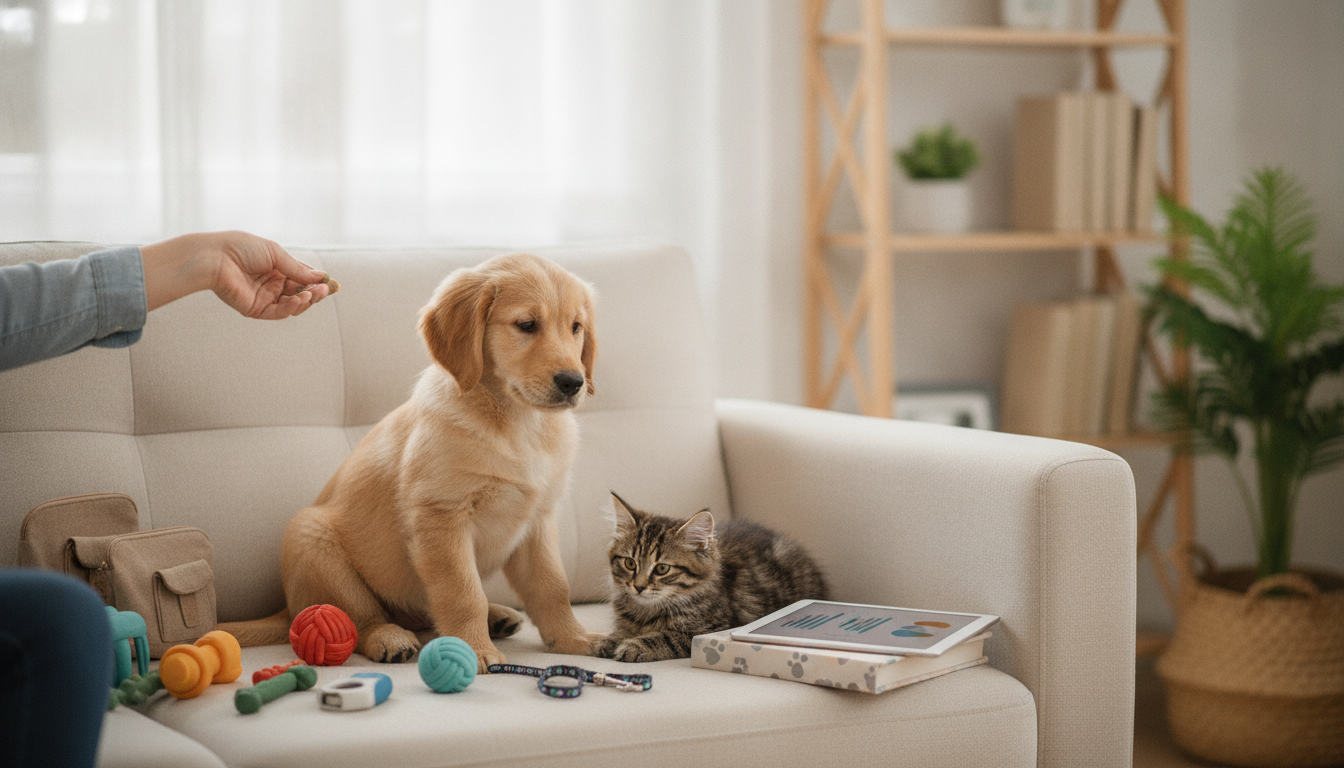
Understanding Your Pet’s Temperament: A Practical Guide to Dog and Cat Behavior for Better Care and Training
Temperament is the steady “style” behind a pet’s behavior—how a dog or cat tends to respond to people, other animals, handling, noise, and change. Learning those patterns helps reduce stress, prevent problems before they start, and tailor training and daily care so it fits the animal in front of you. When you can recognize what’s temperament (and what’s not), daily life gets simpler: greetings are calmer, handling becomes easier, and training moves faster with fewer setbacks.
Temperament vs. Mood vs. Training
It’s common to label a pet as “stubborn,” “dramatic,” or “spiteful,” but those words usually miss what’s really going on. Separating temperament from mood and training helps you respond in a way your pet can actually succeed with.
- Temperament: relatively stable tendencies (bold vs. cautious, social vs. reserved). Temperament influences how quickly a pet warms up, how intense their play gets, and how they cope with surprises.
- Mood: a short-term state influenced by sleep, pain, environment, or recent events. A normally friendly dog may be snappy when overtired; a curious cat may hide after a loud party.
- Training: learned behaviors shaped by consequences. Training can work with temperament, not erase it—an independent thinker can still learn excellent manners, but may need more choice and shorter sessions.
Why it matters: mismatches (too much handling, too little enrichment, inconsistent boundaries) often look like “attitude” but are predictable responses. When you adjust the environment and the plan, behavior often improves quickly.
What Shapes a Dog or Cat’s Temperament
- Genetics and breed type: tendencies toward sociability, activity, guarding, prey drive, or sensitivity vary widely—even within the same breed or litter.
- Early experiences: socialization windows, gentle handling, and safe exposure to novelty influence confidence later. Positive early experiences can build resilience; scary ones can leave lasting hesitation.
- Environment: noise level, space, routine, household traffic, and other pets can amplify or calm behaviors. A busy home can overwhelm a sensitive cat; a high-energy dog may struggle in a low-activity routine.
- Health factors: pain, skin/ear irritation, dental issues, endocrine problems, and cognitive changes can shift behavior quickly.
- Reinforcement history: repeated outcomes (attention, retreat, treats) teach the pet what “works.” If barking makes the mail carrier go away, barking becomes a strategy.
For science-based guidance on humane, reward-focused approaches and early socialization, reputable references include the American Veterinary Society of Animal Behavior (AVSAB) position statements.
Reading Body Language: Fast, Reliable Clues
Body language works best when you look for clusters of signals rather than a single gesture—context changes meaning. A wagging tail with a loose body is different from a wag with a stiff posture and hard stare.
Quick body-language decoder (dogs and cats)
| Signal | Common meaning | Best response |
|---|---|---|
| Freezing / sudden stillness | High arousal; decision point before action | Stop interaction, add distance, offer escape route |
| Lip lick (dog) / rapid tongue flick | Stress, uncertainty, appeasement | Reduce pressure; lower voice; simplify the situation |
| Tail tucked (dog) / tail tight and low (cat) | Fear or discomfort | Increase distance; avoid reaching; pair with calm rewards |
| Tail wag (dog) with stiff body | Arousal; not always friendly | Pause greeting; ask for calm; avoid face-to-face pressure |
| Tail lashing (cat) | Irritation; escalating frustration | End petting/play; allow cool-down in a safe spot |
| Slow blink (cat) | Relaxation; affiliative signal | Blink back; keep movements soft and non-direct |
Common Temperament Profiles and What They Need
For cat-specific behavior concerns (scratching, litter box changes, play aggression), the ASPCA’s cat behavior resources are a helpful starting point.
Training That Matches Temperament (Not Just the Behavior)
If your household needs a structured way to connect observations to clear next steps, consider Understanding Your Pet’s Temperament: A Complete Guide to Decoding Dog and Cat Behavior for Better Care and Training for practical examples you can apply in real time.
Better Daily Care Through Temperament-Aware Routines
For a general overview of canine behavior and welfare-focused handling, the RSPCA’s guide to understanding dog behaviour is another reputable reference.
A Guided Resource for Decoding Behavior
For structured practice and clear examples, a dedicated guide can help link everyday behaviors to temperament patterns and practical next steps. Look for a resource that covers both dogs and cats, includes body-language interpretation, and translates observations into training and care routines. One option to explore is Understanding Your Pet’s Temperament: A Complete Guide to Decoding Dog and Cat Behavior for Better Care and Training.
And for pet parents who spend a lot of time outdoors (training classes, early walks, vet trips), having comfortable layers on hand can make routines easier to stick with—browse options like the Prada Polo Sweater for a polished, everyday piece.
FAQ
How can temperament be assessed without formal testing?
Observe your pet over time in low-pressure situations: responses to gentle handling, strangers, noise, and novelty, plus how quickly they recover afterward. Track patterns (what triggers stress, what helps calm) and avoid labeling based on a single incident.
Why does a friendly pet sometimes growl or swat during petting?
This is often a consent or overstimulation issue: the pet enjoyed the start, then hit a threshold. Watch for early cues (stiffening, tail flicking, turning away), stop, and use a “pause and check” approach; also rule out pain if this is new.
When is behavior a medical issue instead of a training issue?
Sudden behavior changes, new aggression, hiding, elimination changes, shifts in appetite or sleep, or sensitivity to touch can point to discomfort or illness. A veterinary evaluation should come first, followed by a behavior plan once medical causes are addressed.












Leave a comment