Fendi Domino Beige Nubuck Sneakers: Fit, Style, Care
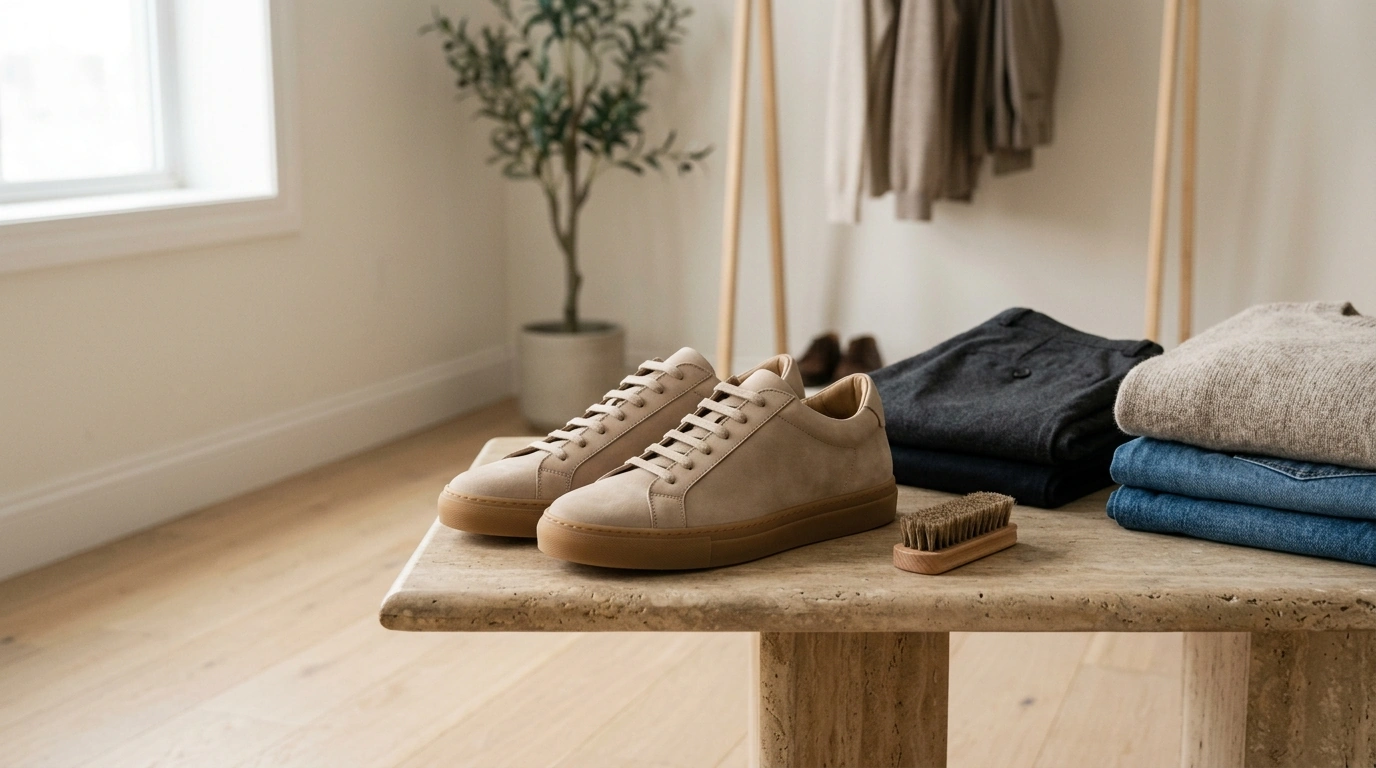
Fendi Domino Beige Nubuck Leather Sneakers: A Refined Everyday Pair
The Fendi Domino in beige nubuck leather pairs a clean, low-profile sneaker shape with the soft, matte character of nubuck. The result is a versatile luxury staple that can dress down tailoring or elevate casual looks—while requiring slightly different care than smooth leather to keep the nap looking even and fresh.
What Makes Nubuck Different
Nubuck is a top-grain leather that’s lightly sanded on the outside, which gives it a velvety surface and a muted, matte finish. That subtle texture is the point: it reads refined rather than glossy, and it tends to look especially tonal in beige—easy to wear across seasons and wardrobes without dominating an outfit.
Because the surface is softly brushed, nubuck shows “life” quickly. A bit of friction can flatten the nap and create slightly darker or shinier areas, and oil or water spots may darken the leather if they’re not handled correctly. The upside is that routine brushing often restores a clean, even look, making nubuck feel like a luxury material that rewards a little attention.
Design Notes to Look For
A low-top silhouette is typically the most adaptable option for everyday styling. It sits neatly under cropped trousers, works with straight-leg denim, and doesn’t visually overwhelm shorts in warm weather. With beige nubuck, that streamlined shape feels even more intentional: the color softens contrast and keeps the sneaker looking elevated rather than sporty.
For daily wear, prioritize the details that affect comfort and longevity: secure lacing that holds the midfoot, collar padding that won’t irritate the ankle, and a sole that feels stable on pavement. Luxury sneakers often rely on precision—clean stitching, tidy edges, and restrained branding—so subtle logo placement and careful finishing matter more than loud graphics.
Sizing and Fit Guide
Start with the size typically worn in fashion sneakers, then adjust based on how you plan to wear them. If you often sit between sizes, a half-size up can be the safer call—especially if you wear thicker socks or add an insole. Toe box comfort is especially important with nubuck: persistent rubbing can flatten the nap and contribute to shiny spots over time.
Heel security should feel stable with only minimal lift. A small amount of initial stiffness is normal, but excessive heel slip can lead to creasing and faster lining wear. If you use insoles for arch support, remember they reduce internal volume; that may require a half-size adjustment where applicable.
Quick Fit Checklist
| Fit area | What it should feel like | Common fix |
|---|---|---|
| Toe room | A thumb’s width in front of the longest toe | Try half size up if toes touch |
| Midfoot | Snug without pressure across the laces | Re-lace to reduce hot spots; avoid over-tightening |
| Heel | Stable with minimal lift when walking | Use a heel grip if slight slip persists |
| Collar/ankle | No pinching when bending the ankle | Adjust lacing pattern or sock thickness |
How to Style Beige Nubuck Sneakers
Beige nubuck sneakers shine when the outfit is built around texture and clean lines. For smart-casual looks, pair them with tapered trousers and a fine knit; keeping the sneaker brushed and spot-free helps maintain a polished silhouette that still feels relaxed. Beige also works as a bridge color: it complements warm palettes like camel, chocolate brown, cream, and sand while still pairing smoothly with cooler tones like gray and navy.
For a dependable weekend uniform, go with straight-leg denim, a relaxed tee, and a light jacket. The beige nubuck softens the contrast that bright white sneakers can create, which makes the whole outfit look more intentional. In warm weather, linen trousers or tailored shorts create an elevated balance—especially in tonal combinations like off-white, stone, and light taupe. For color, muted pastels and olive are easy wins because they echo nubuck’s understated finish.
For a cohesive luxury pairing, consider layering with a soft knit like the Gucci Cashmere Polo Sweater, or switch to a dressier warm-weather option like the Miu Miu Azure Patent Leather Thong Sandal with Square Toe and T-Style Design when the look calls for shine rather than texture.
Care and Maintenance for Nubuck
Nubuck care is straightforward, but it’s different from smooth leather. Protect before the first wear: apply a nubuck/suede protector spray in light, even coats, letting each coat dry fully. This helps resist minor water spots and makes routine cleaning easier.
For more background on responsible leather practices, the Leather Working Group provides material and sustainability guidance, and the American Academy of Dermatology Association offers helpful basics on footwear and foot care habits.
When They Make the Most Sense
Product Snapshot
The Fendi Domino Beige Nubuck Leather Sneakers are in stock and designed as an everyday premium sneaker with a refined neutral finish—easy to style, comfortable for regular wear, and elevated by nubuck’s matte texture.
At-a-Glance Details
| Item | Details |
|---|---|
| Name | Fendi Domino Beige Nubuck Leather Sneakers |
| Price | 692.61 USD |
| Stock status | In stock |
| Product page | View product |
FAQ
Can nubuck leather sneakers be worn in the rain?
Occasional light rain is manageable if a nubuck protector is applied and the sneakers are dried promptly. Repeated soaking can cause staining and texture changes, so blot moisture, air-dry away from heat, then brush to restore the nap.
How do nubuck sneakers differ from suede sneakers?
Both have a brushed surface, but nubuck is made from the outer side of top-grain leather and typically looks finer and more uniform. Care focuses on brushing, using a suede/nubuck eraser, and avoiding oily conditioners that can darken the material.
How often should nubuck sneakers be brushed or protected?
Light brushing after a few wears (or whenever dust is visible) helps keep the nap even. Reapply protector after cleaning or when water no longer beads on the surface—often every few weeks depending on weather and wear frequency.








Leave a comment