Quiet High-Speed Ionic Hair Dryer: 120,000 RPM + Thermo
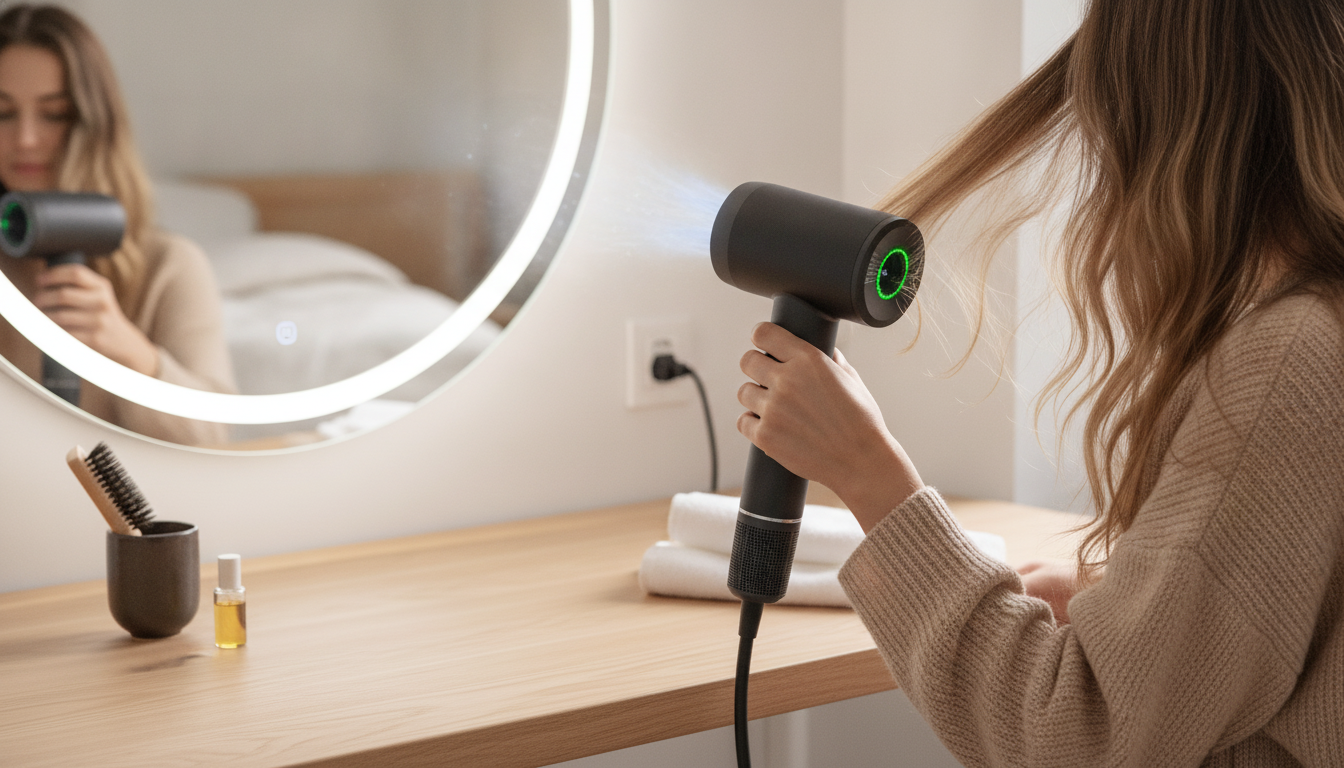
High-Speed Ionic Hair Dryer with Thermo-Control and Low Noise
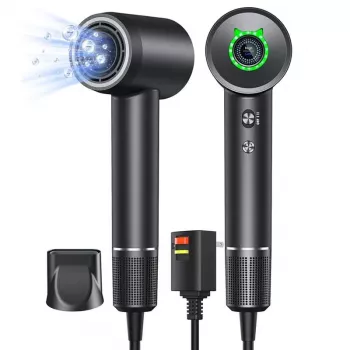
Fast drying is only half the goal—consistent heat, comfortable sound levels, and smoother results matter just as much for everyday styling. This high-speed ionic hair dryer pairs a 120,000 RPM motor with thermo-control that helps keep airflow temperature steady, plus a low-noise design aimed at making early mornings and shared spaces more comfortable. The result is quicker dry times, less frizz-prone finish, and more predictable styling across hair types.
What Makes a High-Speed Dryer Feel Different
A high-speed dryer changes the “feel” of drying because it leans on airflow efficiency instead of cranking heat to do the heavy lifting.
- 120,000 RPM airflow focuses on moving more air efficiently rather than relying on extreme heat to evaporate water.
- 1600W power is tuned for fast drying while remaining manageable for home outlets and daily use routines.
- A compact, lightweight feel (relative to traditional bulky dryers) can reduce wrist fatigue during longer blowouts.
- For thick, long, or high-porosity hair, higher airflow can cut drying time and reduce the temptation to overheat strands.
Thermo-Control: More Consistent Heat for Smoother Results
When heat output swings up and down, hair can dry unevenly—especially through the mid-lengths and ends. Thermo-control is designed to help regulate temperature more evenly, so you can get steady performance without the “hot spot” surprises that sometimes lead to roughness or dryness.
- Thermo-control is designed to regulate temperature more evenly during use, helping prevent sudden spikes that can over-dry ends.
- Consistent heat supports a smoother finish because hair cuticles are less likely to roughen from overheating.
- For frequent styling, stable temperature can be more comfortable on the scalp while still delivering strong drying performance.
- Pair thermo-control with proper technique: keep the nozzle moving and maintain a safe distance to avoid concentrating heat on one area.
Quick view: features and everyday benefits
| Feature | What it does | Why it matters day to day |
|---|---|---|
| 120,000 RPM high-speed motor | Generates strong, focused airflow | Dries faster with less reliance on high heat |
| Thermo-control | Helps stabilize temperature output | More predictable styling; reduced risk of overheating sections |
| Ionic function | Helps reduce static and frizz | Smoother finish and better manageability |
| Low-noise design | Aims to reduce harsh sound profile | More comfortable mornings, apartments, and shared spaces |
| 1600W power | Balances efficiency and performance | Fast dry times without needing excessive heat settings |
Ionic Drying: Frizz Control, Shine, and Manageability
Ionic drying is most noticeable when hair tends to puff, cling, or show flyaways—especially in winter, in dry climates, or when indoor heat pulls moisture out of the air. By helping counteract static, ionic airflow can make hair look more polished with fewer touch-ups.
- Ionic airflow helps counteract static and flyaways, which can be especially noticeable in dry climates or heated indoor air.
- For wavy or curly hair, ionic drying can help maintain definition when paired with a diffuser and lower heat strategy.
- For straight styles, ions can support a sleeker finish with fewer passes of a brush or flat iron.
- Results vary by hair condition and products used; heat protectant and proper tension with a brush still matter.
To reduce damage risk during frequent blow-drying, follow practical care habits like using heat protectant, avoiding the highest heat when it’s not needed, and limiting repeated passes on the same section—tips aligned with guidance from the American Academy of Dermatology Association.
Low Noise: Comfort Without Compromising Speed
Noise may not change your style outcome, but it can change how often you actually want to dry your hair properly—especially on busy mornings. A low-noise approach is about making the routine feel less harsh, without giving up the speed benefits of a high-velocity motor.
- Lower perceived noise can make daily routines less stressful, especially for early starts, families, or noise-sensitive users.
- A smoother sound profile often feels less fatiguing over longer drying sessions than sharp, high-pitched noise.
- For pet owners and parents, quieter operation may reduce disturbance while still delivering quick drying performance.
- Noise experience depends on room acoustics and distance; using the dryer in a more open space can further reduce perceived loudness.
How to Use It for Common Hair Goals
High-speed airflow is versatile, but technique is what turns “fast” into “good.” Small adjustments—like direction, distance, and when to stop—make the difference between a smooth finish and frizz.
Care, Cleaning, and Long-Term Performance
If you rely on garment or textile care instructions for towels, wraps, or hair accessories, it can help to understand standardized labeling basics from the Federal Trade Commission’s care labeling rules, especially when you’re trying to reduce lint shedding that can build up at the dryer intake.
Product Snapshot
Available now
- High-Speed Ionic Hair Dryer – 1600W, 120,000 RPM, Thermo-Control, Low Noise $49.97
- Prada Polo Sweater $795.80
FAQ
Is a 120,000 RPM hair dryer safe for daily use?
Yes, when used correctly. Strong airflow can help you rely less on high heat, but it’s still smart to use heat protectant, keep the dryer moving, choose moderate heat, and maintain comfortable distance from the hair and scalp.
Does ionic drying work for curly hair or only for straight styles?
Ionic drying can help reduce frizz for many hair types, including curls. For best results on curls, use a diffuser, lower heat, and stop once curls are dry to the touch; products and technique make a noticeable difference.
How often should the filter or air intake be cleaned?
Check it weekly if you style daily, and about monthly if you use it occasionally. A clean intake helps preserve airflow, keeps performance consistent, and can prevent changes in sound as lint accumulates.









Leave a comment