75% Wireless Hot-Swap Mechanical Keyboard for Mac/Win
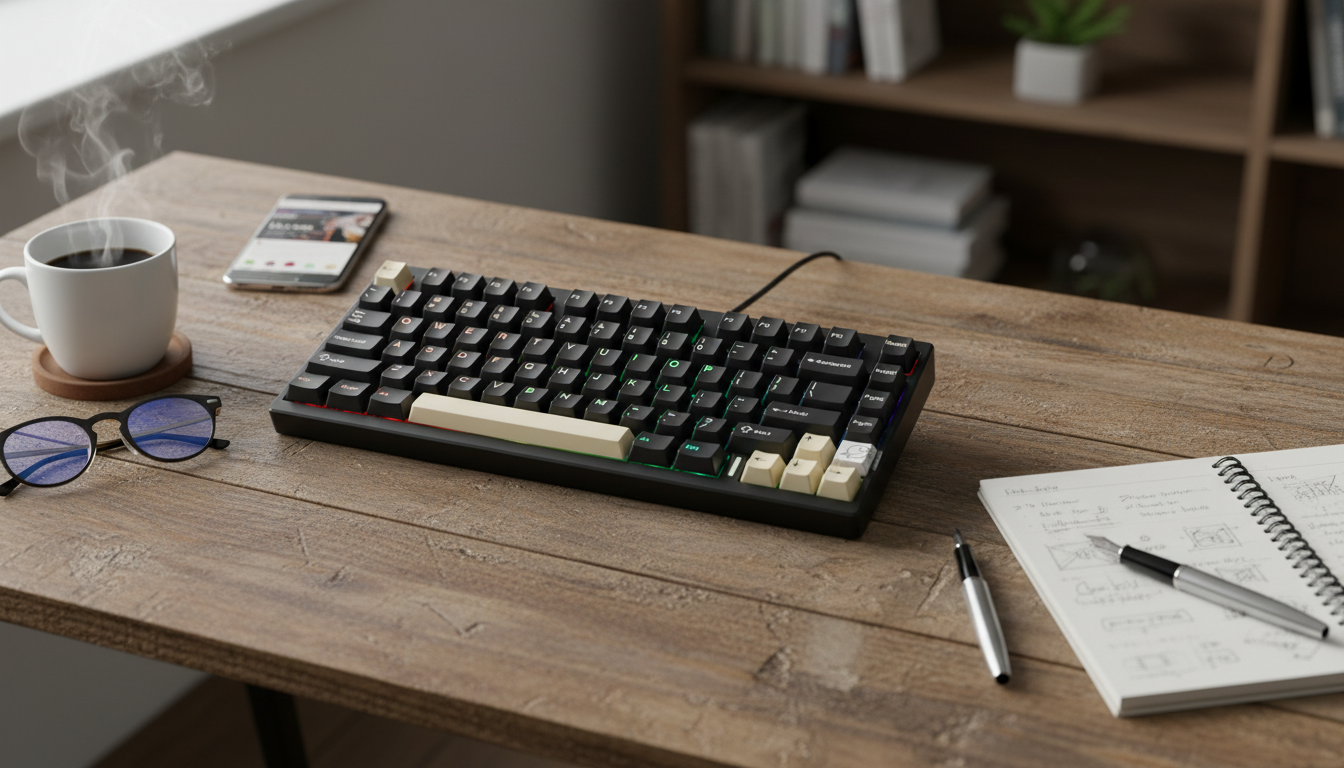
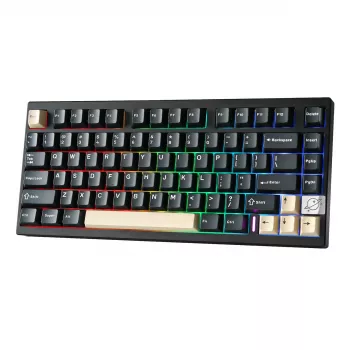
75% Wireless Mechanical Gaming Keyboard with Hot Swap and RGB Backlighting for Mac and Windows
A compact wireless mechanical keyboard can open up desk space without giving up fast inputs, satisfying key feel, or customization. A 75% layout model brings back the keys most people rely on—arrows, function row, and navigation—while trimming the extra width of a full-size board. Add hot-swappable switches and RGB backlighting, plus Mac and Windows compatibility, and it becomes a strong all-around option for gaming, work, and everyday typing.
What a 75% layout changes (and what it keeps)
A 75% keyboard is designed to feel “complete” while staying compact. The main change is losing the numeric keypad and tightening spacing, but the layout typically keeps the practical keys that many smaller keyboards drop.
- Balances compact size with everyday keys: You keep arrow keys and a navigation cluster while trimming the numpad.
- Better fit for smaller desks: Reduced width helps in mouse-heavy games and setups with limited surface area.
- Less reach between keyboard and mouse: Shorter travel can feel more comfortable during long sessions.
- Great for function-row fans: Ideal for users who want F-keys and navigation without a full-size footprint.
Wireless options that matter for gaming and work
Wireless is more than aesthetics. It changes how easily a keyboard moves between rooms, laptops, and desktops—and how clean the setup feels day-to-day.
- Freedom from cable clutter: A cleaner desk is easier to manage, especially with compact layouts and smaller mats.
- Stability matters more than “max range”: For gaming, consistent connection and minimal dropouts are more important than impressive numbers on a spec sheet.
- Multi-device workflows: If you bounce between a desktop and a laptop, quick device switching reduces friction.
- Wired fallback is practical: Charging-and-play or crowded wireless environments are smoother when you can plug in and keep going.
For deeper technical details on wireless standards, the Bluetooth Core Specification is a helpful reference point for how modern Bluetooth connections are defined and maintained.
Hot-swap sockets: the fastest path to a personalized feel
Hot swap is one of the biggest quality-of-life upgrades in modern mechanical keyboards. Instead of locking you into one switch choice, hot-swappable sockets let you change switches without soldering.
- No-solder customization: Swap compatible mechanical switches by pulling them out and pressing new ones in.
- Easier maintenance: A single faulty switch can be replaced in minutes instead of servicing the entire board.
- Adapt over time: Use light linears for fast gaming, tactiles for confirmation while typing, or quieter options for shared spaces.
- Swap safely: Match socket compatibility and check orientation before pressing a switch into place to avoid bending pins.
Common switch feel profiles and why they’re chosen
| Switch feel | Typical strengths | Trade-offs | Good fit for |
|---|---|---|---|
| Linear | Smooth keypress, quick repeated inputs | Less physical feedback | Fast-paced games, rapid key spamming |
| Tactile | Noticeable bump for confirmation | Slightly slower repeat feel for some users | Typing + gaming balance, accuracy-focused inputs |
| Clicky | Strong feedback and audible click | Loud in shared rooms | Solo spaces, users who want maximum feedback |
RGB backlighting that’s useful (not just flashy)
RGB can be decorative, but it’s also genuinely functional—especially on tighter layouts where keys are clustered closer together.
- Better visibility in low light: Backlighting helps prevent mis-keys when the room is dim.
- Use effects as cues: Assign colors to game profiles, shortcuts, or a “work mode” to reduce mistakes.
- Keep it practical: A steady neutral color works well for daily typing, while animated effects can be saved for gaming sessions.
- Battery-conscious settings: Lower brightness and avoid complex animations when running wirelessly.
Mac and Windows compatibility: what to check before buying
A cross-platform mechanical keyboard should feel natural on both operating systems, especially around modifier keys and common shortcuts.
- Modifier behavior: Switching between Command/Option and Windows/Alt should be straightforward.
- Shortcut support: Confirm expected behavior for app commands and system controls.
- Consistent layouts across devices: If you use multiple computers, keeping a familiar mapping reduces re-learning.
- Ergonomic familiarity: Dedicated arrow keys and a recognizable navigation cluster can make daily work feel faster.
For a quick reference on commonly used Mac shortcuts, Apple’s guide is a reliable resource: Apple Platform Keyboard Shortcuts. For a deeper look at how keyboards report inputs at a standards level, the USB HID Usage Tables document is a widely cited reference.
Who this keyboard suits best
Care and setup tips for long-term performance
Product snapshot: 75% Wireless Mechanical Gaming Keyboard
Recommended in-stock picks
- 75% Wireless Mechanical Gaming Keyboard with Hot Swap and RGB Backlightingeb for Mac/Win — $183.47 (in stock)
- Prada Polo Sweater — $795.80 (in stock)
- Burberry Lambskin Shearling Jacket – Classic Style Redefined — $6,245.41 (in stock)
At-a-glance details
| Item | Details |
|---|---|
| Product | 75% Wireless Mechanical Gaming Keyboard with Hot Swap and RGB Backlighting for Mac/Win |
| Availability | In stock |
| Price | 183.47 USD |
| Store page | See product link above |
FAQ
Does hot swap mean switches can be changed without soldering?
Yes. Hot-swappable sockets let you remove compatible switches and press new ones in without soldering; just confirm the switch type supported and align the pins before seating the switch.
Will it work on both Mac and Windows without remapping everything?
A Mac/Windows-compatible keyboard is designed to support typical modifier behavior and common shortcuts on both systems. Optional remapping can still be used for personal preference, but it shouldn’t be required for basic day-to-day use.
Is wireless good enough for gaming?
Wireless can be reliable for gaming when the connection is stable and free of interference. If you notice congestion or need to play while charging, switching to wired mode is a straightforward fallback.









Leave a comment